Our Main Office
Construction Equipment Guide
470 Maryland Drive
Fort Washington, PA 19034
800-523-2200


Hydraulic excavators are among the most versatile machines on a job site. They can dig, lift, load, demolish, clear land and power a wide range of attachments. For buyers, the real decision is not whether an excavator belongs in the fleet. It is which machine size, configuration and hydraulic package will produce the best return for the work ahead.
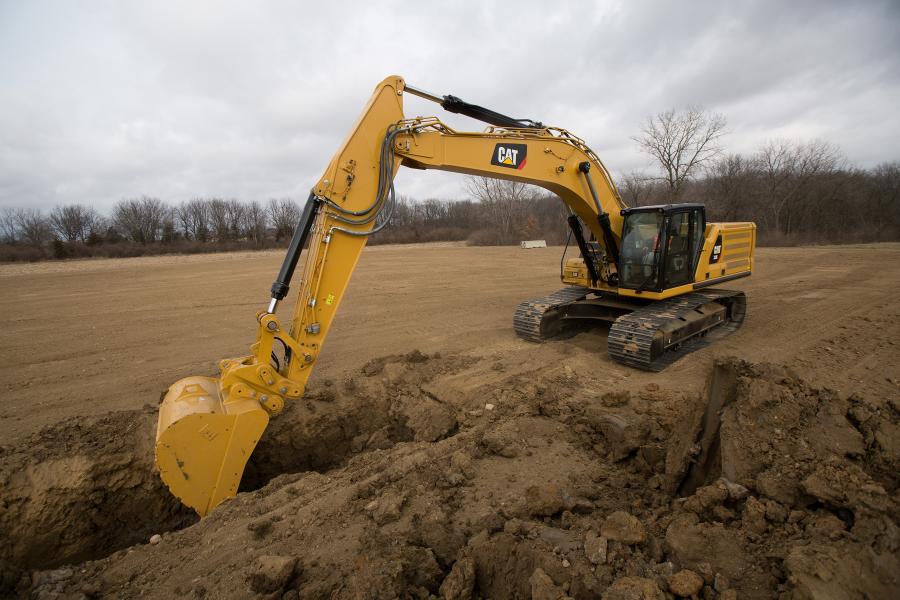
Modern excavators combine strong digging performance with refined hydraulics, comfortable cabs and technology that can improve productivity, fuel efficiency and control. They are now a core machine category across construction, utility work, demolition, roadbuilding, material handling and land clearing. A good buying decision starts with understanding the work, then choosing a machine that fits the site, crew and budget.
How to Buy the Right Excavator
Find Excavator Models and Specifications
Find specifications and charts for a host of Excavators in our Excavator Specs and Charts section
More than a dozen manufacturers offer mid-size and full-size hydraulic excavators for the North American market. That gives buyers plenty of choice, but also plenty of room to overspend, underspec or overlook long-term ownership costs. Start with the basics below and narrow the field from there.
1) Start with the primary job.
Most buyers need an excavator to dig, but many also expect it to trench, lift pipe, load trucks, clear brush, break concrete or handle demolition work. Identify the task that will demand the most from the machine on a consistent basis. That job should guide your target size class, hydraulic capability, counterweight needs and attachment setup. Buying for the toughest regular task usually works better than buying for the easiest one.
2) Match the machine to the site.
Machine dimensions matter almost as much as power. A confined site may call for short-tail swing. Height restrictions may favor a lower-profile or specialty boom arrangement. Urban and roadside work may point toward a wheeled excavator, while rough ground, soft conditions and heavy digging typically favor crawlers. The right excavator is not just the one that can do the work. It is the one that can do it efficiently where you work.
3) Think through configuration and attachment needs.
Excavators come with a wide range of boom, stick and hydraulic options. If you plan to use breakers, thumbs, grapples, mulchers or specialty tools, make sure the machine has the auxiliary hydraulics, flow and pressure to support them. If long reach, lifting performance or transport width will matter, those choices should be made before price shopping gets too far along.
4) Evaluate dealer support as part of the machine.
Brand matters, but dealer support often matters more once the machine is in service. Ask about parts availability, field service response, warranty handling, machine setup assistance and technician support. A strong local dealer can make ownership easier. A weak support network can turn even a solid machine into a headache.
5) Plan transport before you buy.
A larger excavator may look attractive on paper, but hauling it can add real cost and complexity. Transporting heavy equipment may require permits, routing restrictions, escorts and a trailer setup that fits both the base machine and the attachments. Before sizing up, make sure your transport plan and hauling budget are realistic for the machine you are considering.
If You’re Renting or Leasing
Renting or leasing can be a smart path when you need short-term production, want to test a model before purchase or need to preserve cash. The same buying logic still applies: match the machine to the work first, then compare rates and terms.
1) Prioritize productivity over headline rate.
A lower rental rate is not a bargain if the machine is underpowered, lacks the right hydraulics or slows the crew every day. Look at the project schedule, expected production, hauling plan and attachment requirements first. Then compare rental or lease quotes on a true cost-of-use basis.
2) Rent with the full job in mind.
The excavator may start on one task and end up doing three others before the project is over. Consider trenching, lifting, grading, demolition, clearing and attachment use before locking in a machine. A slightly different size class or attachment package may improve utilization enough to justify the added cost.
Tips on Inspecting a Used Hydraulic Excavator
A used excavator can be a strong value if its condition matches the asking price. Before signing anything, inspect the machine carefully, run it under load if possible and review service records when available.
1) Start with the hydraulic system.
The hydraulic system largely defines how an excavator feels and performs. Look for leaks at cylinders, hoses, pumps and fittings. Slow functions, jerky movement, unusual noises or signs of contamination can point to expensive repairs. Visible leaks may also suggest weak maintenance practices overall.
2) Pay close attention to the undercarriage and swing system.
Undercarriage wear can change the economics of a used machine quickly. Check track condition, rollers, sprockets and idlers, and inspect the swing bearing area for excess play, noise or metal contamination in lubricant. An excavator with major swing or undercarriage wear may need costly work soon after purchase.
3) Look for structural damage and signs of abuse.
Cracks in booms, sticks, welds or attachment points deserve serious attention. So do dents, twisted components and evidence of poor repairs. A machine may still run, but structural issues can affect safety, resale value and long-term durability.
4) Treat attachments as a bonus, not the basis of the deal.
You are primarily buying the base machine. If attachments are included, inspect them, but do not let a worn bucket, breaker or cutter distract from the excavator itself. Consider attachment value separately and make sure the machine underneath is the real reason the deal makes sense.
What You Can Expect to Pay
Excavator pricing depends on size class, brand, hydraulic capability, included technology, attachment readiness, machine hours and regional demand. Use broad ranges as a starting point, then compare actual dealer, auction and rental quotes for the configuration you need.
New
Prices for new models vary by brand, operating weight, hydraulic performance, emissions package, optional features and market demand. Comparing quotes from multiple dealers is well worth the effort. Here are some broad pricing categories:
Used
Used pricing is more variable because age, operating hours, maintenance history, attachment package and overall condition all affect value. Here are some general pricing guidelines for conventionally equipped second-hand crawler excavators with 2,500 to 4,000 operating hours:
Rent
Rental rates are shaped by machine size, local demand, transport costs and the level of competition in the market. In general, mid-size crawler excavators can rent for roughly $800 to $1,500 per day, $1,800 to $3,100 per week and $5,200 to $7,000 per month. National rental houses, independent rental companies and equipment dealers may all price the same class differently, so it pays to compare.
Some Financing Options
Buying a piece of heavy equipment usually involves financing. Leasing with an option to buy can reduce upfront cost for buyers who want flexibility, while conventional financing may make more sense for owners planning to keep the machine for years. The best structure depends on cash flow, utilization and how quickly you expect the machine to earn.
Specs and Features to Compare
1) Weight and horsepower
Machine weight and engine size vary widely in the mid-size to full-size excavator market. The right combination affects breakout force, stability, lifting ability, transport requirements and operating cost. If a machine will spend most of its time digging, prioritize the power and base weight needed for reach and bucket performance. If lifting is a major task, compare lift charts carefully and make sure the machine can handle the loads at the required radius and height.
2) Hydraulic flow/pressure
Hydraulic flow and pressure are critical if the excavator will run more than a bucket. Auxiliary circuits, flow rates and pressure settings determine whether a machine can support cutters, hammers, shears, grapples and other tools effectively. When comparing models, make sure the hydraulic package supports the attachments you plan to use now and any you may add later.
3) Strength and reach
Boom and stick choices affect reach, digging force, lifting performance and attachment compatibility. Heavy-duty setups may make sense for demolition or severe digging, while long-reach arrangements can help with drainage, slope work or work from a distance. Buyers should compare reach needs against breakout force and attachment weight so the machine is configured for the kind of work it will perform most often.
4) Tracks or tires?
Crawler excavators remain the standard choice for heavy digging, rough terrain and soft ground conditions. Wheeled excavators offer a different kind of value: faster travel between nearby job sites, easier operation on paved surfaces and better maneuverability in some urban settings. The right choice depends on travel demands, surface conditions and the type of work the machine will see every week.
Attachments That Can Change the Buying Decision
Attachments can turn an excavator from a dedicated digging machine into a far more versatile fleet asset. They can also influence which model makes the most sense to buy. If the machine will run specialty tools, verify hydraulic compatibility, coupler options and available guarding before making a final decision. Here are some common attachment categories:
Auger — Drilling holes for fence posts, pilings or other structural members is made easier when the auger is fitted to the end of an excavator boom-stick. Hard-to-reach drill spots are easily reached and several holes can be drilled without moving the excavator.
Breaker-Hammer — These are the tools that pound a hardened bit through hard materials to split or rubblize them. They do this with downward force applied by the excavator and an internal reciprocating ram that delivers hundreds of blows per minute.
Bucket and Thumb — A bucket is the workhorse, the fundamental attachment. It comes in narrow, general purpose and broad widths as needed. When a moveable “thumb” is added, it gives an operator means to scoop up and grasp oversized or ungainly material.
Vibratory Compactor — This boxy attachment with a flat bottom is employed to firm loose soil or aggregate. It rapidly delivers short, vibratory blows. Example: On a 15-ton excavator, a 2,000-lb model delivers 2,200 cpm with a vibrating force of 16,000 pounds.
Coupler — This attachment connects an excavator to tools. Hydraulic quick-couplers are hands-free. Mechanical models can require an operator to climb from a cab. Tilt-rotating couplers give a tool wrist-like dexterity in handling material or for slope-sided digs.
Crusher-Screener — Buckets scoop up material, but some also crush or screen the material. Bucket screeners and crushers process aggregate and debris. The buckets often employ hydraulic-driven churning shafts that chew up concrete and brick.
Demolition Tools — Hydraulic excavators can dismantle structures and reduce scrap. With attachments, they can pull apart masonry, rip welded material and shear steel beams. Example: The jaws of a steel-cutting shear on a 20-ton excavator can deliver 280,000 lbs of cutting force.
Drum Cutter — Grinding through rock or concrete material is easy (if loud) with this attachment. Torque, weight and RPMs do the trick. A 150-hp excavator needs at least 55 gpm of flow to spin a 3,000-lb cutter’s hardened fingers and carve a 46-in. wide path.
Forestry Tools — Various excavator attachments have been developed to speed the harvesting and handling of timber products. Attachments include shears and saws, wood splitters/sectioners, and stump grinders and stump extractors.
Grapple — This is a relatively simple tool used in a host of applications from forestry to demolition to construction. Two moving jaws reach out like thumb and finger and clamp together. In larger models, the jaws are wider and can resemble buckets.
Magnet — Putting magnetism to work, this attachment is commonly used in scrap yards for moving irregularly shaped steel material. It also is employed on demolition and construction sites for clean-up. A midsized round magnet is about 40 inches in diameter.
Mulcher — These chewing tools can reduce a 30-ft.-tall tree to a stump in less than a minute as the mulcher rides down on the upright trunk, shredding it. The tool can be six feet in width, with larger models requiring 70 gpm hydraulic flow or more.
Pile Driver — Mounting this attachment on an excavator gives it the ability to sink and extract piles, girders, casings and similar permanent or temporary structures. High-speed vibrations help propel a pile into the ground and also help loosen it during extraction.
Rock Saw — A vertical rock saw dangling from the end of a boom-stick is a formidable tool. It can slice through asphalt, concrete, and granite, among other materials. A 100-hp machine with 75 gpm flow can spin a 5-ft. blade and cut 25 in. deep.
Some Excavator Brands
Bobcat — This legacy American equipment-maker is known for its compact equipment including skid steers (which it invented) and CTLs, but also for compact excavators. It continues to grow the size of its excavator line - and the size of its equipment.
Case — This Wisconsin equipment manufacturer dates from 1842. It introduced its first excavator in 1967. Today, its full-size crawler excavators range from a 102-hp 15-ton model to a 532-hp 90-ton model. Its “intelligent” hydraulic system maximizes efficiency.
Caterpillar — The Illinois company was formed in 1925 and is an icon in the heavy construction equipment industry. Cat offers eight mid-size and six full-size hydraulic excavators as well as seven wheeled excavators, the largest a 169-hp model.
Doosan — The South Korean firm began manufacturing heavy machinery in 1937, turning out its first crawler excavator in 1978. Today, Doosan builds 12 crawler models and three wheeled models. Its largest excavator on wheels is a 24-ton unit boasting 186 hp.
Gradall — In 1944, this Ohio company introduced an innovative wheeled excavator with a telescoping rigid boom. The unique rotating-boom engineering has been translated into highway speed, rough terrain, crawler and railway models, powered by Volvo engines.
JCB — For 66 years, this British manufacturer has marketed finely engineered machinery. It offers seven full-size crawler and seven wheeled excavators. It classifies its hydraulic excavators as high-reach demolition, long-reach, mass excavation, and extra heavy duty.
John Deere — This Illinois company, founded in 1837, markets 14 mid-size excavators and three full-size, the largest a 512-hp model. One example: Model 300G LC is a 15-ton, 223-hp unit that digs 25 ft. deep and boasts several operational efficiency systems.
Hitachi — The Japanese firm built its first excavator in 1957. Its products available in the U.S. include four mid-size models and six large (mining) excavators, the largest with paired 1,900-hp engines. The smallest mid-size unit has 100 hp and digs 19 ft. deep.
Hyundai — A South Korean company established after World War II, Hyundai builds both wheeled and crawler mid-size excavators with Perkins, Cummins or Scania engines. A 150-hp wheeled model can whip along on pavement at 24 mph.
Kubota — The Japanese company started as a foundry in 1890 and continues to expand its product line. Its excavator models now are small but are expected to grow as the line matures. One of Kubota’s strengths as a manufacturer is the popularity of its engines.
Komatsu — The Japanese firm’s roots go back 99 years. It builds hydraulic excavators, from compact to mining machines, including a dozen mid-size crawler models and a half dozen wheeled. The units incorporate numerous “intelligent” automated control systems.
Kobelco — The company formed in 1930 and built its first excavator in 1963, a tri-cycle rubber-tired model. Today it manufactures a full range of crawler excavators - compact to large - plus three long-reach and four “high and wide” specialty models.
Liebherr — The German company, begun in 1949, markets seven wheeled excavators, 10 crawler models and five pontoon units engineered for dredging operations. In addition, the company is launching a new “8th-generation” series of hydraulic excavators.
Link-Belt — This company with American roots dates to 1880, but it didn’t build its first excavator until the 1980s. It now offers 11 full-size or mid-size hydraulic excavators, 13 forestry-oriented models and four designated for material handling.
LiuGong — A Chinese firm started in 1958, LiuGong introduced its first hydraulic excavator in 2001. Though it is a fairly recent addition to the excavator-manufacturing industry, the company now offers eight mid-to-full-size crawler models in the U.S.
SANY — Formed in 1989 in China, SANY entered the U.S. market in 2006. Three years later, it built the largest excavator in China, a 200-ton model. It offers two mid-size and two large excavators in the U.S., the biggest a 400-hp unit that can dig down 27 feet.
Takeuchi — Founded in 1973, the Japanese company introduced the first compact excavator eight years later. It continues to grow the line and today has a true mid-size excavator, the TB2150, which weighs 17 tons and is powered by a 114-hp diesel engine.
Volvo — Founded in 1906, the Swedish firm began to offer hydraulic excavators in 1991. Today, the manufacturer’s product line-up for North America includes eight large crawler excavators (the biggest a 600-hp model), six mid-size units and six wheeled excavators.
Brief Summary
The best excavator purchase is the one that fits the work, the site and the ownership plan. Start with the primary application, compare size and hydraulic capability, account for transport and attachments, and put real weight on dealer support. Buyers who make those comparisons early are more likely to end up with a machine that stays productive and profitable over time.





Construction Equipment Guide
470 Maryland Drive
Fort Washington, PA 19034
800-523-2200
Construction Equipment Guide covers the nation with its four regional newspapers, offering construction and industry news and information along with new and used construction equipment for sale from dealers in your area. Now we extend those services and information to the internet. Making it as easy as possible to find the news and equipment that you need and want.
Contents Copyrighted 2026, by Construction Equipment Guide, which is a Registered Trademark, registered in the U.S. Patent Office. Registration number 0957323. All rights reserved, nothing may be reprinted or reproduced (including framing) in whole or part without written permission from the publisher. All editorial material, photographs, drawings, letters, and other material will be treated as unconditionally assigned for publication and copyright purposes and are subject to Construction Equipment Guide’s unrestricted right to edit and comment editorially. Contributor articles do not necessarily reflect the policy or opinions of this publication.
Read our privacy policy here.
Mastodon